Embarking on a journey to discover the world's most Iconic Landmarks & Attractions is more than just ticking off a bucket list; it's an immersion into history, culture, and breathtaking natural beauty. These are the places that have captured human imagination for centuries, from ancient wonders whispering tales of empires past to modern marvels showcasing the pinnacle of human ingenuity. Getting to know them helps you not just plan a trip, but understand the very fabric of our shared global heritage.
Whether you dream of standing before towering monuments, exploring vibrant cityscapes, or witnessing nature's raw power, this guide is your compass. We'll traverse continents, dive into captivating histories, and uncover the practical tips that make visiting these extraordinary sites an unforgettable experience.
At a Glance: Your World Tour Checklist
- Global Immersion: Explore an extensive list of iconic landmarks and attractions across North America, Asia, Europe, Africa, the Middle East, South America, and Australasia.
- Historical Context: Understand the stories, eras, and significance behind each site.
- Practical Visitor Tips: Get actionable advice on the best times to visit, what to expect, and key experiences.
- Beyond the Postcard: Discover unique facts and local insights that enrich your travel planning.
- Adventure Awaits: Inspire your next grand journey with a comprehensive overview of Earth's most celebrated destinations.
North America: From Golden Gates to Towering Geysers
The North American continent offers an incredible array of landmarks, blending stunning natural landscapes with monumental human achievements. From urban icons to vast national parks, there's a spectacle for every traveler.
United States: A Tapestry of Icons
In California, the Golden Gate Bridge in San Francisco is an unmistakable red suspension bridge completed in 1937, drawing 10 million visitors annually. You can walk or bike across this engineering marvel for unparalleled bay views. Nearby, Alcatraz Island transitions from its infamous past as an inescapable federal prison (1934-1963) to a fascinating tourist attraction. For nature lovers, Yosemite National Park in the Sierra Nevada Mountains is a majestic symbol of the state's wilderness. In Los Angeles, the Hollywood Sign spans 350 feet long and 45 feet tall, an enduring symbol perfect for a photo op.
New York City stands as a beacon of urban landmarks:
- The Metropolitan Museum of Art (The Met) is the largest museum in the US, housing over 2 million artworks.
- The Empire State Building, a 102-storey Art Deco structure from the 1930s, offers panoramic views from its observation decks; aim for before sunset for the best light.
- The Statue of Liberty, a 151-foot tall gift from France in 1886, remains a powerful symbol of independence, attracting 3.5 million visitors each year.
- Central Park is an 843-acre urban oasis, drawing over 40 million visitors annually.
- One World Trade Center, North America's tallest building at 541 meters, features a moving observatory experience.
- The Chrysler Building, an Art Deco skyscraper from 1928, also provides fantastic city views.
- Ellis Island served as a pivotal immigration center from 1900-1954 and is now an important museum.
- Times Square is a world-renowned entertainment hub, electrifying with its billboards and bustling crowds.
- While exploring the city, you might find yourself navigating the vibrant shopping districts. For instance, Your guide to 34th Street offers a glimpse into one of the city's lively retail and entertainment arteries, perfect for a break from historical sightseeing.
Beyond the coasts, Mount Rushmore in South Dakota features colossal carved busts of four US presidents. Chicago, Illinois, boasts Cloud Gate (The Bean), a mesmerizing reflective sculpture. In Las Vegas, Nevada, the Welcome to Fabulous Las Vegas Sign is an iconic photo stop on The Las Vegas Strip, a 4.2-mile stretch of unparalleled attractions. The Hoover Dam, a monumental human-made structure, bridges Nevada and Arizona.
Up in Seattle, Washington, the Space Needle, a 605-foot observation tower from 1961, defines the city skyline. Nearby, Mount Rainier National Park showcases a magnificent volcano, stunning waterfalls, and ample hiking trails. Utah's Arches National Park is home to Delicate Arch, a natural sandstone arch attracting 1.5 million annual hikers. Florida's Everglades National Park preserves a unique slow-moving watershed system teeming with wildlife. And of course, Arizona's Grand Canyon, a natural landmark visible from space, stretches 277 miles long and up to 18 miles wide, a testament to geological time.
Hawaii presents its own unique treasures. In Honolulu, Oahu, the Pearl Harbor Memorial solemnly marks the WWII attack site, while Diamond Head State Monument is a majestic volcanic crater over 300,000 years old. On the Island of Hawaii, Hawaiʻi Volcanoes National Park is home to the active volcanoes Kilauea and Mauna Loa.
Back on the East Coast, Arlington National Cemetery in Virginia is the nation's most famous military cemetery, the solemn resting place of presidents and countless soldiers. The Washington Monument in D.C., a 555-foot marble obelisk from 1884, provides sweeping city views. The White House, D.C., the US President's residence since 1800, offers public tours of select parts. Finally, Yellowstone National Park in Wyoming (extending into Montana and Idaho), the US's first National Park (1872), is famed for its abundant wildlife and the iconic Old Faithful geyser.
Canada: Northern Majesty and Urban Towers
Straddling the border of Ontario, Canada, and New York, USA, Niagara Falls stands as one of the seven natural wonders of the world, offering breathtaking views from both countries. In Toronto, the CN Tower soars 553 meters tall, featuring an observation deck and the exhilarating Edgewalk experience. Alberta's Banff National Park is renowned for its snow-capped mountains and pristine lakes, including the iconic Lake Louise. On the East Coast, Peggy's Point Lighthouse in Nova Scotia, built in 1915, is a classic maritime landmark. Montreal is home to Saint Joseph's Oratory, which opened in 1904 and is Canada's largest Roman Catholic church.
Asia: Ancient Empires and Modern Metropolises
Asia is a continent of profound contrasts, where ancient wonders stand testament to millennia of civilization, and futuristic skylines pierce the clouds.
Sri Lanka, China & Nepal: Sacred Peaks and Ancient Armies
In Dambulla, Sri Lanka, Sigiriya Rock Fortress is a 200-meter-high ancient volcano formation, home to the site of a 5th-century Royal Palace. China boasts the monumental Great Wall of China, a UNESCO World Heritage Site stretching over 21,196 km (13,000 miles). Taking 2,300 years to build, it attracts over 10 million annual visitors. The Terracotta Army Museum in Xi'An, Shaanxi, displays thousands of statues of Emperor Qin Shi Huang's armies, created to protect him in the afterlife. Spanning China and Nepal, Mount Everest is the world's highest peak at 29,032 feet, challenging approximately 800 climbers each year.
Japan, Singapore & Hong Kong: Gardens, Gateways, and Giant Buddhas
Kyoto, Japan, is a city steeped in tradition. Fushimi Inari Taisha is famous for its mesmerizing pathway of thousands of red torii gates, while the Arashiyama Bamboo Forest is known for its towering trees and the serene sounds of rustling bamboo. The Hiroshima Peace Memorial Park serves as a poignant memorial to the victims of the nuclear attack. In bustling Tokyo, the Imperial Palace is the residence of the Imperial Family, surrounded by 1.15 sq km of beautiful gardens. The Tokyo Tower, a 332.9-meter communications tower from 1958, offers city views. Beyond the urban sprawl, Mount Fuji in Shizuoka, a 3,776-meter volcano, is one of Japan's three sacred mountains.
Singapore is a city-state of innovation and beauty. Gardens by the Bay span 101 hectares, brilliantly blending horticulture and art with its Supertrees. The Merlion, an iconic statue and fountain (lion's head, fish body) built in the 1970s, is a must-see.
On Lantau Island, Hong Kong, the Tian Tan Buddha (Big Buddha) is a majestic 34-meter tall statue, reachable by ascending over 265 steps.
Cambodia, India, Malaysia & Taiwan: Temples, Tombs, and Twin Towers
The Angkor Wat Temple Complex in Siem Reap, Cambodia, is a sprawling 400 sq km UNESCO World Heritage Site from the 12th century. As the former center of the Khmer Kingdom, it demands at least two days to fully explore its intricate temples. The Taj Mahal in Agra, India, a white marble mausoleum built by Shah Jahan, is one of the New Seven Wonders of the World, attracting 7-8 million annual visitors; visiting at sunrise is highly recommended for its ethereal beauty.
In Kuala Lumpur, Malaysia, the Petronas Twin Towers are the world's tallest twin towers (452 meters), featuring an accessible sky bridge and an 86th-floor viewing deck. Taipei 101 in Taipei, Taiwan, at 1,667 feet tall, held the title of the world's tallest building from 2004-2009 and is engineered with a massive wind damper for stability against typhoons and earthquakes.
Vietnam & Gibraltar: Limestone Karsts and Macaque Habitats
Ha Long Bay in Quang Ninh Province, Vietnam, a UNESCO World Heritage Site, captivates with its 1,600 limestone islands, offering opportunities for hiking, snorkeling, and diving amidst its unique seascape.
Though geographically European, Gibraltar Nature Reserve on the Iberian Peninsula (often associated with Mediterranean travel routes) is unique for Europe's only wild macaques and panoramic views spanning Spain, Gibraltar, and Morocco.
Europe: Castles, Cathedrals, and Ancient Empires
Europe, a continent rich in history and culture, presents an astonishing collection of landmarks, from medieval castles to architectural masterpieces and ancient ruins.
France: Parisian Panoramas and Provincial Wonders
The Palace of Versailles, a prime example of Baroque architecture, was once home to French Kings; allow a full day to visit its magnificent chateau, Queen's Hamlet, and expansive gardens. In Normandy, Mont Saint-Michel, a medieval abbey perched on a rocky island, is a Gothic architectural marvel. Cité de Carcassonne, with its climbable ramparts, offers stunning countryside views.
Paris, the City of Light, dazzles with its iconic structures:
- The Sacré-Cœur Basilica, a Roman Catholic Church opened in 1914, graces the top of Montmartre.
- The Eiffel Tower, built for the 1889 World Fair, offers breathtaking views from its viewing deck, accessible via over 674-1,665 steps (or elevators).
- The Arc de Triomphe, commissioned in 1806 and completed in 1836, provides panoramic city views from its summit.
- The Louvre Museum is the world's most visited museum (9 million annual visitors), famously home to the Mona Lisa and its distinctive glass pyramid.
- Notre Dame Cathedral, a Gothic masterpiece built between the 12th-14th centuries, is renowned for its intricate architecture.
- The Moulin Rouge has been the world's most famous cabaret since the early 1900s, instantly recognizable by its vibrant red facade.
Italy & Vatican City: Roman Grandeur and Venetian Charm
In Italy, the Milan Cathedral (Duomo di Milano), begun in 1386 and completed in 1965, is one of the world's largest churches, adorned with over 3,500 statues. The Leaning Tower of Pisa offers unique city views from its internal staircase. St. Mark's Square (Piazza San Marco) in Venice is the heart of the city, housing St. Mark's Basilica. The Rialto Bridge, built in 1588, is Venice's oldest canal bridge. Near Naples, Mount Vesuvius, an active volcano, famously caused the 79 A.D. destruction of Pompeii, whose remarkably preserved ruins offer a haunting glimpse into ancient Roman life.
Rome, the Eternal City, holds countless treasures:
- The Spanish Steps, over 130 Baroque stairs from 1725, are beautiful to climb, but beware: fines apply if you sit on them!
- Largo di Torre Argentina is a unique cat sanctuary amidst ancient ruins.
- The Colosseum, completed in 80 A.D., is an engineering marvel that hosted gladiatorial fights for 50,000 spectators.
- The Trevi Fountain, a Baroque masterpiece from the 1700s and Rome's largest (49.15m wide, 26.3m high), is famed for its coin-tossing tradition, with legends claiming it ensures your return to Rome, and the collected funds going to charity.
Within Vatican City, St. Peter's Basilica, built since the 1600s, is the world's largest church and the Pope's official residence. The Sistine Chapel, built 1477-1480, features Michelangelo's iconic painted ceiling.
England, Scotland & Northern Ireland: Ancient Stones and Royal Residences
In England, Stonehenge, a UNESCO World Heritage Site dating back to c. 3,000 BC, still sparks debate about its purpose; a visitor center helps unravel its mysteries. London is a hub of iconic landmarks:
- Big Ben (Elizabeth Tower since 2012) is a towering 316-foot clock tower.
- Buckingham Palace, built in the 1700s, has been the primary residence for monarchs since 1837.
- The Palace of Westminster (Houses of Parliament), rebuilt in the mid-1800s, is England's political center.
- The London Eye, a 135-meter observation wheel from 1999, offers unparalleled city views.
- The Shard, a 1,016-foot skyscraper by Renzo Piano, provides dining and spectacular views.
- Tower Bridge, opened in 1894, is a Grade I listed suspension bridge featuring a thrilling glass floor walkway.
- Westminster Abbey is a magnificent Gothic abbey used for royal coronations and burials.
- Beyond London, Malham Cove in Malham is a dramatic 260-foot high, horseshoe-shaped landmark popular with walkers.
On Northern Ireland's Causeway Coast, the Giant's Causeway is a rugged landscape of basalt columns, famously linked to a legend of giants. In Scotland, Edinburgh Castle, built in the 11th century, is one of the world's oldest buildings, attracting over 2 million visitors annually.
Germany, Greece, Hungary, Turkey, Switzerland, Belgium & Russia: Diverse Heritage
The Acropolis in Athens, Greece, an ancient Greek citadel from the 5th century BC, features the majestic Parthenon; visiting in May or October is recommended to avoid extreme heat and crowds. The Brandenburg Gate in Berlin, Germany, an 18th-century neoclassical monument from 1788, once symbolized the division between East and West Germany, now standing as a powerful symbol of unity. The Berlin Wall Memorial offers a somber commemoration of those who died crossing the wall. In Bavaria, Neuschwanstein Castle, a 19th-century palace built for King Ludwig II, is a fairytale-like Romanesque Revival masterpiece.
The Hungarian Parliament Building in Budapest, Hungary, nearly 120 years old, is the country's biggest building, known for its 365 towers and magnificent interior. The Blue Mosque (Sultan Ahmed Mosque) in Istanbul, Turkey, built in 1609, is an active mosque and a classic example of Ottoman architecture, with thousands of blue Iznik tiles, drawing over 4 million visitors annually. Chapel Bridge (Kapellbrücke) in Lucerne, Switzerland, holds the distinction of being Europe's oldest wooden covered bridge. The Atomium in Brussels, Belgium, built for the 1958 World's Fair, is a 335-foot structure resembling an atom, featuring spherical observation pods, exhibitions, and a restaurant. Red Square in Moscow, Russia, is renowned for the colorful domes of St. Basil's Cathedral and the historic Kremlin.
Lebanon & Croatia: Ancient Mysteries and Adriatic Gems
Baalbek in Lebanon features colossal ancient ruins of unknown origin, believed to have been built over millennia by Phoenicians, Greeks, Romans, and Arabs. Plitvice Lakes National Park, Croatia, is the oldest and largest national park, celebrated for its clear turquoise waters, extensive trails, and stunning waterfalls. The Dubrovnik City Walls, Croatia, offer a breathtaking 2-kilometer walk for stunning Adriatic Sea views (entry typically over 30 euros), and the old town is famous for its Baroque architecture and as a filming location for "King's Landing" in Game of Thrones.
Africa & Middle East: Pyramids, Safaris, and Desert Marvels
Africa and the Middle East hold some of the world's most ancient and awe-inspiring landmarks, from natural wonders of immense scale to human creations that have stood for millennia.
Egypt, Tanzania & Zambia/Zimbabwe: Pharaohs, Falls, and Wildlife
Victoria Falls, straddling the border of Zambia and Zimbabwe, is one of the world's largest waterfalls (355 feet tall, 5,604 feet wide), famous for its massive sheet of falling water and the resulting spray. In Luxor, Egypt, The Valley of Kings, a UNESCO World Heritage Site built between 1539 BC and 1075 BC, holds over 60 tombs of Egyptian Pharaohs, including the famed Tutankhamun. The Pyramids of Giza in Cairo, Egypt, built around 2600 BC, are one of the Seven Wonders of the Ancient World, almost entirely intact, with the Great Pyramid being the tallest human-made structure for 3,800 years. The enigmatic Great Sphinx of Giza stands nearby, guarding these ancient tombs.
Serengeti National Park in Tanzania spans 30,000 sq km and is home to vast wildlife populations and the spectacular Great Wildebeest Migration. Mount Kilimanjaro, also in Tanzania, is Africa's tallest mountain at 19,340 feet, and one of the world's Seven Summits.
UAE, Jordan & South Africa: Desert Skyscrapers and Rose Cities
The Burj Khalifa in Dubai, UAE, is the world's tallest building (828 meters), offering panoramic views from its 124th-floor observation deck and a luxurious 154th-floor lounge. The Sheikh Zayed Grand Mosque in Abu Dhabi, UAE, built to honor Sheikh Zayed bin Sultan Al Nahyan, is the largest mosque in the UAE and the third-largest globally, renowned for its stunning architecture. Petra (Raqmu/Raqēmō) in Wadi Musa, Jordan, known as "The Rose City," is one of the New Seven Wonders, featuring breathtaking pink sandstone buildings carved directly into the hillsides by the Nabataeans. Table Mountain in Cape Town, South Africa, an iconic flat-topped natural landmark at 1,086 meters, is easily accessible via cable car or hiking trails.
Ecuador: Darwin's Living Laboratory
The Galapagos Islands, Ecuador, represent a largely untouched wilderness, famed for their unique giant tortoises and marine iguanas. It was here that Charles Darwin found crucial evidence for his theory of evolution.
South America: Ancient Citadels and Vibrant Cities
South America offers a captivating blend of ancient civilizations, vibrant urban culture, and unparalleled natural wonders.
Peru, Brazil & Argentina: Lost Cities, Cascading Waters, and Glacial Beauty
Machu Picchu in the Andes Mountains, Peru, is a 600-year-old Incan citadel at 2,350 meters. This UNESCO World Heritage site and one of the New Seven Wonders, with its precisely engineered granite structures, remains a mystery; it can be reached via the challenging four-day Inca Trail.
Rio de Janeiro, Brazil, boasts several iconic attractions:
- Sugarloaf Mountain (Pão de Açúcar) offers epic panoramic views of the city and bay.
- Christ the Redeemer, an Art Deco sculpture (30 meters/125 feet tall) atop Corcovado Mountain, is one of the Seven Wonders of the Modern World; visiting early avoids the biggest crowds.
- Copacabana Beach is world-renowned for its golden sand, warm waters, and vibrant atmosphere.
- The Selaron Steps (Escadaria Selarón) are a colorful staircase adorned with globally sourced tiles, a true urban art project.
- In Manaus, the Meeting of the Waters is a natural phenomenon where the dark Rio Negro and sandy Rio Solimões flow side-by-side for miles without mixing.
- The vast Amazon Rainforest, covering over 2 million sq miles, is crucial for planetary health, hosting over 10% of the world's known species.
Recoleta Cemetery in Buenos Aires, Argentina, is one of the most visited cemeteries, featuring ornate mausoleums and the graves of notable figures like Eva Peron. Iguazu Falls, on the border of Argentina and Brazil, comprises over 270 individual waterfalls, an astonishing display of nature's power. The majestic Perito Moreno Glacier, also in Argentina, is a dynamic ice formation that frequently calves massive ice blocks into Lake Argentino.
Australasia: Reefs, Rocks, and Opera Houses
The diverse continent of Australasia presents a unique collection of natural wonders and modern architectural marvels.
Australia: Coastal Beauty and Ancient Monoliths
The Twelve Apostles on Australia's Great Ocean Road are dramatic limestone stacks, visited by millions for stunning views, hiking, or helicopter tours. The Great Barrier Reef in Queensland, Australia, is the world's largest reef ecosystem, teeming with diverse marine life—a must-see for snorkelers and divers. Uluru (Ayres Rock), Northern Territory, Australia, is a half-a-billion-year-old monolith in Uluru-Kata Tjuta National Park, offering rare plant and wildlife viewing, and holding immense spiritual significance for Indigenous Australians.
Sydney is home to two globally recognized landmarks:
- Bondi Beach, a world-renowned beach known for its surfing and lively atmosphere.
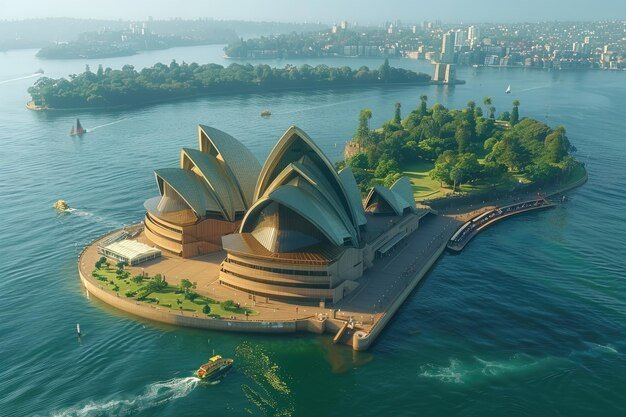
- The Sydney Opera House, a UNESCO World Heritage Site from 1973, is an iconic performing arts venue with a distinctive shell-like design.
- The Sydney Harbour Bridge, completed in 1932, is another architectural marvel, offering bridge climbs for adventurous visitors.
Crafting Your Landmark Itinerary
Exploring Iconic Landmarks & Attractions is a journey that reshapes your perspective and fills your memory with incredible experiences. From the hushed reverence of ancient temples to the dizzying heights of modern skyscrapers, each site offers a unique window into our world's story.
As you plan your adventures, remember to:
- Prioritize Your Interests: Are you a history buff, a nature enthusiast, or an urban explorer?
- Research Practicalities: Check opening hours, ticketing options, and transportation in advance.
- Embrace Local Culture: Many landmarks are deeply intertwined with local customs; be respectful and open to new experiences.
- Allow Time for Discovery: Don't just rush from one photo op to the next. Take a moment to absorb the atmosphere, read the interpretive signs, and talk to local guides.
The world is full of wonders waiting to be discovered. Which iconic landmark will call to you next?